No 38D
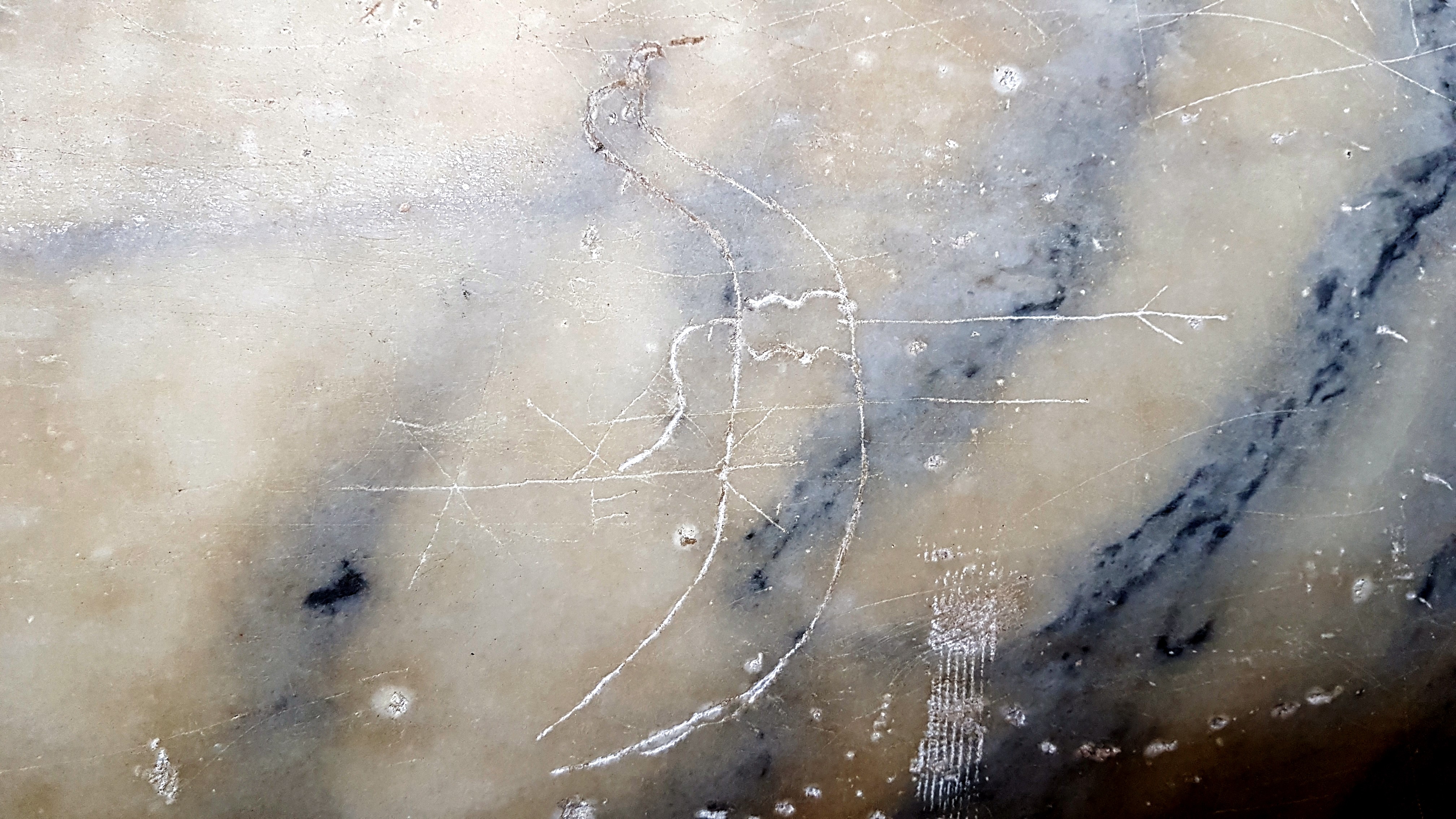
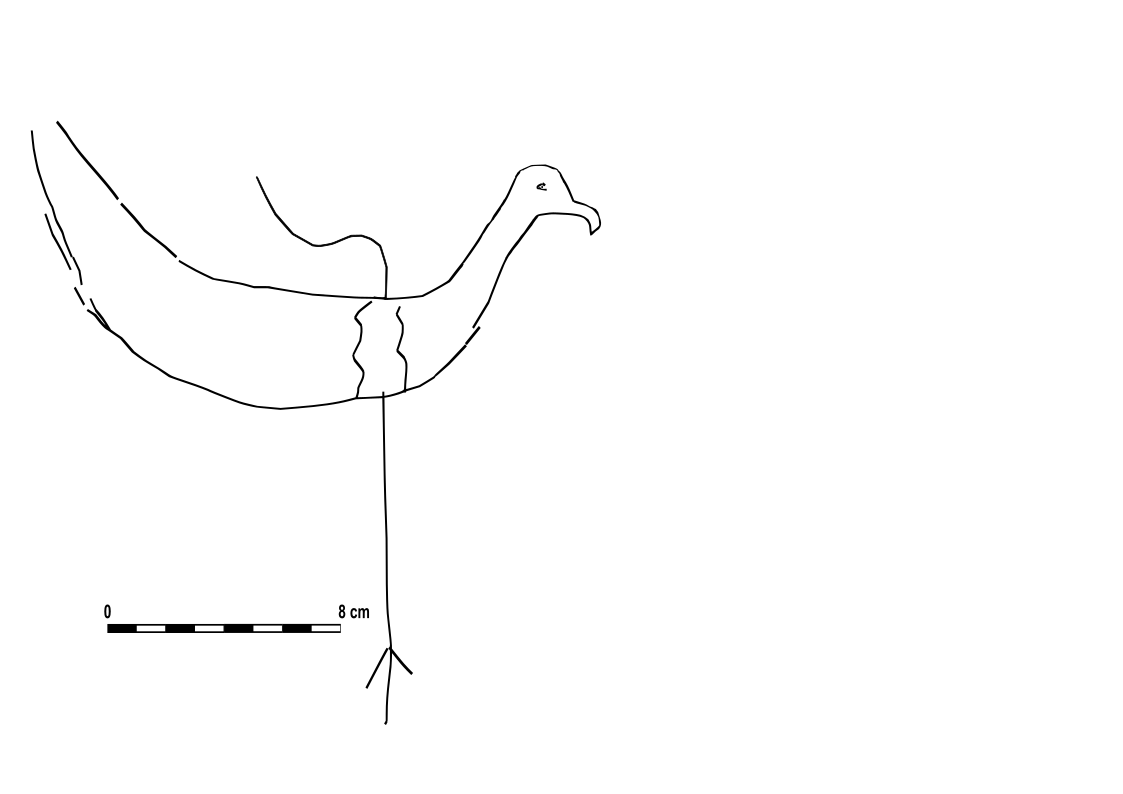
Location: On the southeast column in the east exedra of the south gallery.
Material: Marble surface, 6th century.
Dimensions: 20 cm (height) by 20 cm (width), at eye level.
Condition: Likely incised; not intersected by other marks.
Technique: Incised.
Description: A contour drawing of a bird in profile with an elongated body and extended wings in horizontal position. The long, slightly curved neck leads to a small head with a pointed beak, while the legs are thin and schematic. The stylization emphasizes the wingspan and the overall horizontal composition, suggesting the bird in flight.
Аttribution: A seabird, most likely a gull or cormorant.
Publications: none.
Commentary: The simplified but expressive rendering points towards a seabird. The elongated proportions and sharp beak resemble a gull (Larus cachinnans, Caspian gull), common in the Black Sea region. Another possible identification is a cormorant, a bird closely associated with coastal areas. Both species are familiar to seafarers and hold symbolic meaning: the gull as a messenger of land and freedom of travel, the cormorant as a watchful, enduring creature. In the context of a church or monumental setting, such bird imagery may have been connected with ideas of vigilance, hope, or spiritual journey.
Date: 13th–15th century AD?