No 18D
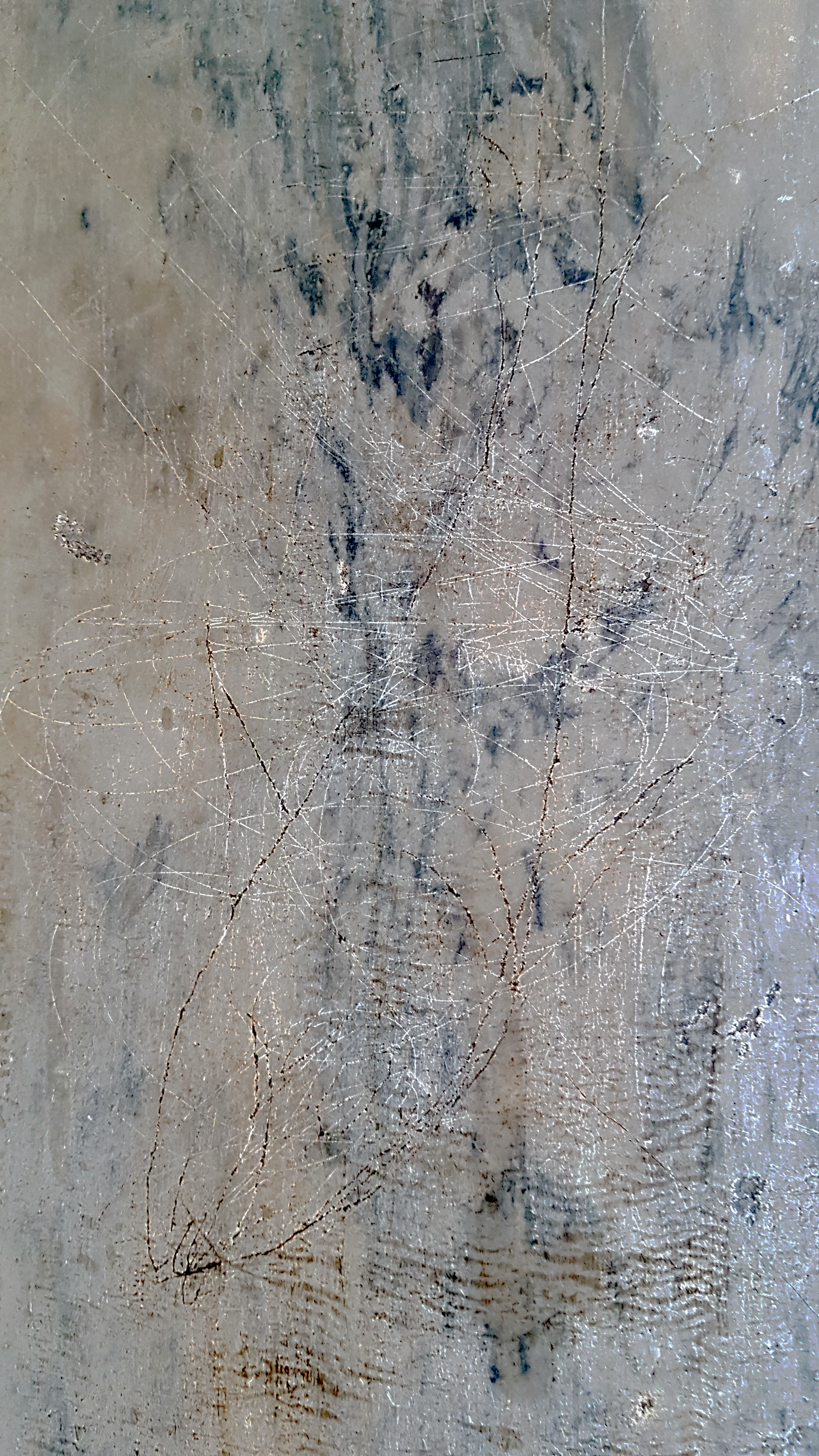
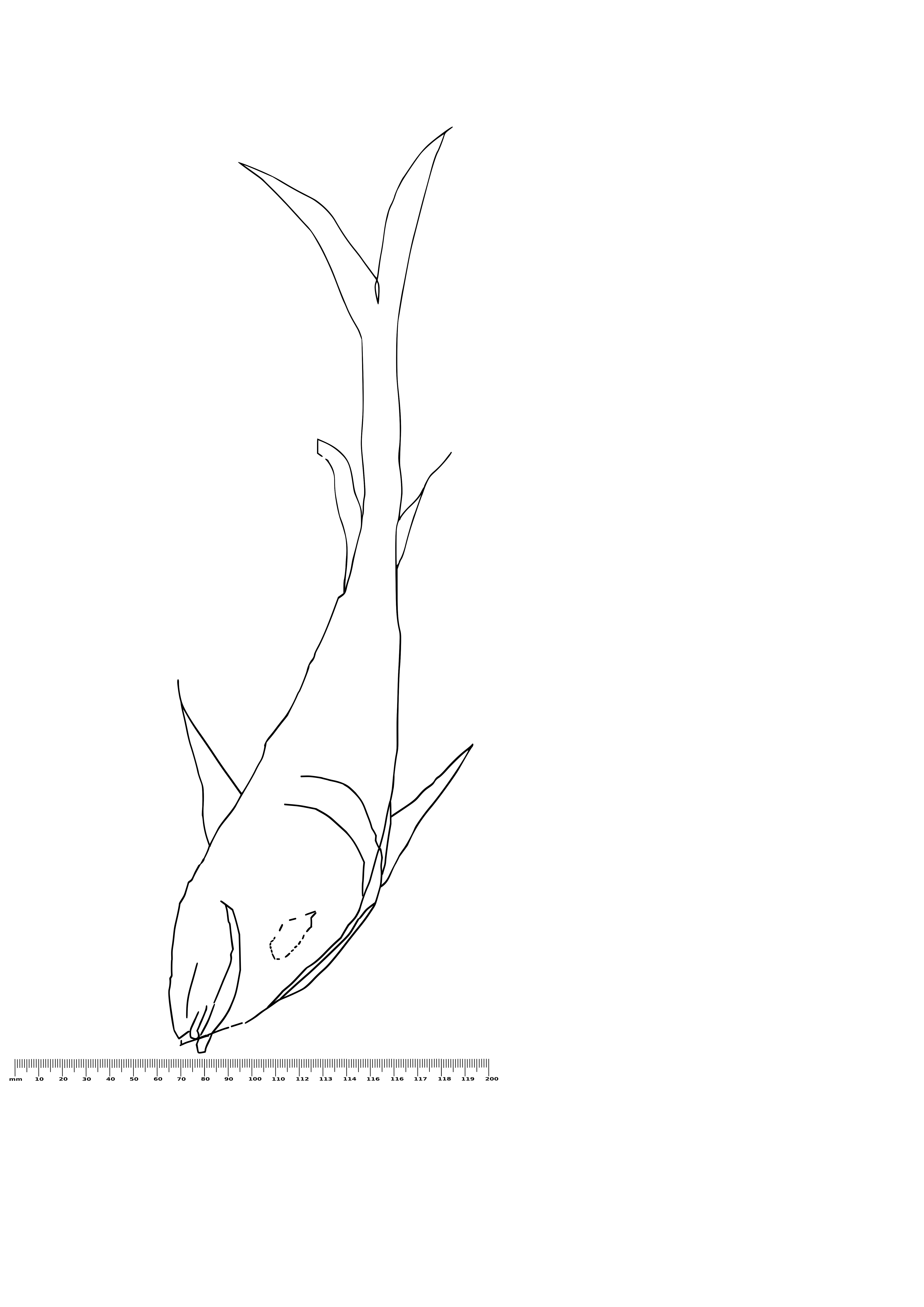
Location: On the southern column of the eastern exedra of the southern gallery.
Material: Marble surface, 6th century.
Dimensions: Length: 40 cm; width: 12.7 cm; located 140 cm above floor level.
Condition: Lightly incised, not intersected by other marks.
Technique: Incised.
Description: The drawing shows a vertically oriented fish, curving slightly to the left with its head facing down. A pair of short barbels (whiskers) extend from the front of the mouth. The gills are indicated by two lines, two fins are shown on both the dorsal and ventral sides, and the tail is forked.
Attribution: A stylized depiction identified as a white barbel (Barbus barbus).
Publications: none.
Commentary: In Christian iconography, the fish primarily symbolizes Jesus Christ, the Eucharist, and baptism. It also represents the human soul and the resurrection, evoked through the story of Jonah. Additionally, it signifies the evangelizing mission, as seen in the parable of the miraculous catch.
An alternative zoological interpretation is prompted by the distinctive barbels. The depicted fish can be identified with high probability as a barbel (Barbus barbus), based on its elongated body shape and the presence of barbels at the corner of the mouth—a distinctive feature of this genus. The absence of the lower pair of barbels and the representation of two dorsal fins deviate from the true morphology of Barbus barbus, which normally has a single dorsal fin. These inconsistencies are most likely due to stylistic simplification or limited anatomical accuracy in the depiction rather than an indication of another taxon. Overall, the figure represents a schematic but recognizable portrayal of a barbel-type cyprinid. A similar depiction can be found in an illustration in Adriaan Coenen's "Book of Fishes" (1577-1579) labeled as "the horn-whiskered fish called the ray-fin" of the carp family[1]. In the light of what has been said so far, it seems that the drawing of the fish has no connection with Christian symbolism. While a connection to naturalists like Pierre Belon (in Constantinople, 1546) or Konrad Gesner (who received drawings from Istanbul) is tempting, no direct evidence supports this. Any such attribution remains speculative.
Date: Unknown.
[1] Adriaen Coenen. Visboek, 1577-1579, fol. 337r. [viewed 10 October 2025]. National Library of the Netherlands. Available at: https://galerij.kb.nl/kb.html#/nl/visboek/page/348/zoom/3/lat/-46.255846818480315/lng/31.640625.